


I’ll never forget the panic I felt standing in Bangkok’s Suvarnabhumi Airport at 2 AM. My connecting flight to Chiang Mai had been cancelled. My hotel reservation was non-refundable. And my phone’s international plan had mysteriously stopped working.
That’s when I learned a valuable lesson about travel in Asia. Sometimes, having professional support makes all the difference between adventure and disaster.
Fast forward five years and dozens of Asian destinations later, and my perspective has completely shifted. I’ve traveled both ways—solo planning everything myself and working with Asia travel agencies. And honestly? Both approaches have their magic.
Let me share what I’ve learned about making this decision work for you.
Understanding What an Asia Travel Agency Actually Does

Here’s the thing most travelers don’t realize. Modern Asia travel agencies aren’t your grandmother’s tour operators. They’re not just booking hotels and flights anymore.
The best ones function more like travel architects. They design experiences based on your interests, budget, and travel style.
I worked with an agency for my Vietnam trip last year. Beyond booking accommodations, the team connected me with a family-run cooking class in Hoi An that wasn’t advertised anywhere online. They also arranged a private sunrise tour of Angkor Wat, allowing me to avoid the massive crowds. When my luggage was delayed, a local contact stepped in to help right away.
These connections? You simply can’t Google them.
When You Should Consider Using a Travel Agency
Not every trip requires professional help. My weekend jaunts to Singapore or Hong Kong? I book those myself in about twenty minutes.
But certain situations practically beg for expert assistance.
Multi-country itineraries top this list. Planning a route through Thailand, Laos, Cambodia, and Vietnam involves complex logistics. Border crossings, visa requirements, transportation connections—it gets overwhelming fast. An agency handles these seamlessly.
First-time Asia travelers benefit enormously from professional guidance. The culture shock is real. Having someone who understands both Western expectations and Asian realities creates a softer landing.
Families with kids face unique challenges in Asia. Finding child-friendly restaurants, navigating with strollers, ensuring food safety—these concerns multiply with little ones in tow. Agencies specializing in family travel know which destinations work and which don’t.
Special interest trips like photography tours, culinary journeys, or spiritual retreats require insider knowledge. Try finding the best spots for capturing Bali’s rice terraces during sunrise. An experienced agency knows exactly where and when.
The Real Cost: Is an Asia Travel Agency Worth It?
Let’s talk money, because I know that’s what you’re thinking.
Most people assume agencies cost significantly more. Sometimes that’s true. But often? The math surprises you.
I spent three weeks comparing prices for a two-week Japan itinerary. My DIY research took about 40 hours. The agency’s quote came in just 12% higher than my painstaking calculations. But their package included travel insurance, 24/7 emergency support, and airport transfers I’d forgotten to budget.
Those 40 hours I spent? That’s a full work week. What’s your time worth?
Plus, agencies have wholesale rates and industry connections most travelers never access. That boutique hotel in Ubud charging $300 per night online? My agency got it for $210.
Consider the hidden costs of DIY planning too. Booking mistakes happen. I once accidentally reserved a hotel in the wrong Osaka (yes, there are multiple cities with similar names in Japan). That error cost me $200 to fix.
Finding the Right Asia Travel Agency for Your Needs
Not all agencies are created equal. I’ve worked with five different ones across various trips, and the quality varies dramatically.
Start by identifying agencies specializing in Asia. Generic travel companies often lack the regional expertise you need. They might book your flights and hotels competently, but they won’t know that April is the wrong month for visiting Myanmar’s ancient temples.
Look for agencies with on-the-ground connections. Ask specific questions: Do you have staff based in Asia? Who do I contact if something goes wrong at 3 AM Bangkok time?
Read reviews obsessively, but read them smartly. One negative review about weather isn’t concerning—that’s luck. Multiple reviews mentioning unresponsive customer service? That’s a pattern.
I always request customized quotes from at least three agencies. This reveals their responsiveness, creativity, and pricing structure. The agency that took two weeks to respond to my inquiry? They didn’t get my business.
Check their specializations too. Some agencies excel at luxury travel, others at adventure tourism. Match their strengths to your travel style.
How to Work Effectively with Your Travel Agent
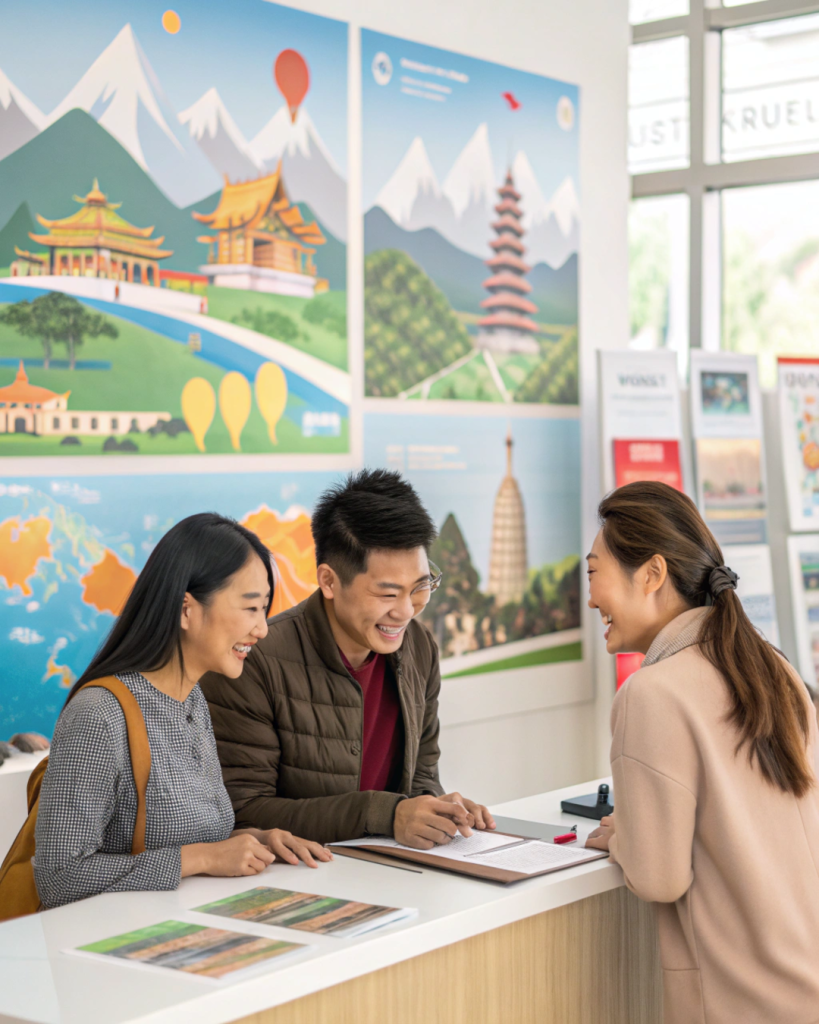
Here’s where many travelers go wrong. They treat agencies like vending machines—insert money, receive itinerary. That approach rarely produces great results.
The best experiences come from collaboration. Before contacting an agency, get clear on your priorities. Make three lists: must-haves, nice-to-haves, and absolute no-gos.
For my Sri Lanka trip, my must-haves included wildlife safaris and coastal relaxation. My nice-to-haves featured tea plantation visits and local markets. My no-gos? No rushed schedules or beach resorts packed with tourists.
This clarity helped my agent craft something perfect. Without it, I’d have gotten a generic itinerary hitting standard tourist spots.
Be honest about your budget from the start. Don’t say $5,000 when you really mean $3,000. Agents can work with almost any budget, but they need the truth to create realistic plans.
Communication matters enormously. Respond promptly to questions. Provide feedback on draft itineraries. The more engaged you are, the better your final trip becomes.
And please, ask questions. Lots of them. Why are we staying in this neighborhood? What’s the backup plan if weather disrupts our plans? How do tipping customs work here? Good agents love curious clients.
The Hybrid Approach: Getting the Best of Both Worlds
Here’s my favorite strategy, developed after years of trial and error. I call it the hybrid approach, and it’s changed how I travel.
Use agencies for the complicated stuff. Let them handle flights, inter-city transportation, and accommodation bookings. These are time-consuming and often require local knowledge.
But keep your daily activities flexible. Don’t schedule every single meal and activity. Leave room for spontaneity and serendipity.
On my Philippines trip, my agency arranged all island-hopping transportation and hotel stays. But they left my afternoons unscheduled. This flexibility let me linger at a hidden beach I discovered. I met a local artist who invited me to her studio. These unplanned moments became my favorite memories.
This approach also addresses a common complaint about agency travel—feeling over-scheduled. You get logistical support without sacrificing spontaneity.
Consider booking your initial and final destinations through an agency. Handle middle portions yourself. This provides safety nets at the beginning and end while allowing independence in between.
Regional Specialists vs. Full-Service Asia Agencies
The Asia travel industry roughly divides into two categories. Understanding this helps you choose wisely.
Regional specialists focus on specific countries or sub-regions. A Thailand-focused agency knows every floating market, hidden temple, and family-run restaurant in the country. They maintain relationships with local guides who’ve been leading tours for decades.
I used a Vietnam specialist for my Halong Bay trip. They arranged a cruise on a traditional junk boat with just six cabins. The owner personally greeted us at the dock. This connection created an intimate experience impossible on those massive cruise ships.
Regional specialists shine when you’re exploring one or two countries in depth. Their expertise covers subtle cultural nuances and seasonal variations, ensuring every detail aligns with your plans. With that insight, they might even suggest the perfect beach in Phuket to match your vibe.
Full-service Asia agencies cover the entire continent. They’re ideal for multi-country journeys where you need coordination across different regions. They’re also helpful for travelers still deciding exactly where to go.
My first big Asia trip covered Thailand, Cambodia, Vietnam, and Laos. A full-service agency handled the complexity of four different visa processes and multiple border crossings. They knew which routes made sense and which created unnecessary complications.
Red Flags to Watch Out For
Not every agency deserves your trust or money. I’ve encountered some problematic situations that taught me what to avoid.
Pressure tactics should send you running. If an agent insists you book immediately or miss out on pricing, walk away. Legitimate deals don’t require instantaneous decisions.
Vague pricing structures are another warning sign. You should receive detailed breakdowns showing exactly what you’re paying for. If an agency provides only a total figure without itemization, push back hard.
Watch out for agencies that seem disinterested in your preferences. If they’re pushing their standard itinerary regardless of your stated interests, they’re not really listening. Cookie-cutter solutions rarely create memorable trips.
I once consulted an agency that kept suggesting luxury resorts despite my clearly stated preference for boutique guesthouses. They were trying to maximize their commission rather than serve my needs.
Poor communication before you book predicts poor communication during your trip. If getting responses takes days during the planning phase, imagine trying to reach them when you’re stranded somewhere.
Specialized Types of Asia Travel Experiences
Asia’s diversity supports countless travel styles. Finding agencies specializing in your preferred style dramatically improves results.
Adventure travel agencies focus on activities like trekking, diving, and mountaineering. They maintain relationships with certified guides and quality equipment providers. Safety standards vary widely across Asia, so expert vetting matters enormously.
Culinary travel has exploded in popularity. Specialized agencies arrange cooking classes, market tours, and food-focused itineraries. They know which street food stalls are safe, which restaurants require advance reservations, and where locals actually eat.
Spiritual and wellness tourism draws many travelers to Asia. Agencies specializing in this niche connect you with authentic meditation retreats, yoga ashrams, and traditional healing practices. They can distinguish genuine experiences from tourist traps.
Luxury travel agencies maintain relationships with high-end hotels and resorts. They secure room upgrades, special amenities, and VIP experiences. If you’re investing significant money in accommodations, these connections provide real value.
Photography-focused agencies understand lighting conditions, seasonal considerations, and locations that photograph beautifully. They know when cherry blossoms peak in Japan and where to capture Bali’s terraced landscapes without crowds.
For comprehensive planning across multiple destinations, resources like Asia Travel Mastery: Your Ultimate Guide to Exploring 14 Iconic Destinations can complement agency services by providing detailed insights into specific locations.
Technology and Modern Asia Travel Agencies
The industry has transformed dramatically with technology. Understanding these changes helps you leverage modern tools effectively.
Many agencies now offer mobile apps providing real-time updates. Your itinerary, confirmation numbers, and emergency contacts live in one accessible place. When my flight got cancelled in Seoul, I received a notification with rebooking options before the airline’s desk even opened.
Virtual consultations have become standard. You don’t need local agencies anymore—work with specialists anywhere. I planned my Indonesia trip with an agency based in Bali while sitting in my apartment in New York.
AI-powered recommendation engines help agencies match travelers with suitable destinations. Answer some questions about your preferences, and algorithms suggest customized options. But remember—technology assists human expertise; it doesn’t replace it.
Many agencies maintain active social media presence showcasing real-time experiences. Follow agencies you’re considering. Their content reveals their style, values, and destination knowledge.
Building Long-Term Relationships with Travel Professionals
Here’s something most travelers overlook. Developing an ongoing relationship with a travel professional creates compounding benefits over time.
My primary Asia travel agent has now planned four trips for me. She remembers my preferences, dietary restrictions, and travel style. She knows I despise early morning flights and love staying in locally-owned accommodations. Each itinerary gets better because she understands me.
Long-term relationships also mean priority service during peak booking seasons. When everyone’s trying to reserve Japan’s cherry blossom season, my agent remembers me. I get first crack at limited availability.
Loyalty often brings informal perks too. Last-minute upgrades, waived fees, insider tips about upcoming deals—these benefits flow to established clients.
Consider finding one excellent agency and building that relationship rather than shopping around constantly for marginal price differences. The value of expertise and personalized service compounds over time.
The DIY Elements You Should Still Handle Yourself
Even when working with agencies, some elements benefit from personal attention. Understanding this balance optimizes your travel experience.
Travel insurance deserves your direct research. Agency-recommended policies often carry higher commissions. Compare options independently from providers like World Nomads or SafetyWing to ensure you’re getting the best coverage for your needs.
Visa applications typically require personal involvement anyway. While agencies can advise on requirements, you’ll still submit applications yourself for most countries. Familiarize yourself with processes early—some Asian visas take weeks to process.
Packing and gear selection remains your responsibility. Agencies might provide packing lists, but they won’t know your specific needs. Research climate conditions and cultural dress codes yourself.
Learning basic phrases in local languages creates richer experiences. Agencies won’t teach you to say “hello,” “thank you,” or “where’s the bathroom” in Thai or Vietnamese. Invest time in language basics before departure.
Restaurant research for non-included meals gives you control over dining experiences. Agencies suggest options, but exploring food blogs and local recommendations adds personal discovery to your trip.
Understanding the Value Proposition
Let’s get philosophical for a moment about what you’re actually buying when you hire an Asia travel agency.
Booking through an agency isn’t just about logistics. It means saving hundreds of hours otherwise spent researching flights, comparing hotels, and sifting through contradictory reviews. It brings expertise—knowledge built over years of professional experience. And most importantly, it offers peace of mind, knowing a competent partner will step in when problems arise.
Most valuably, you’re buying better experiences. Agencies open doors that remain closed to typical tourists. That village homestay in rural Laos. The private temple ceremony in Kyoto. The fishing trip with locals in Kerala. These experiences don’t appear in Lonely Planet guides.
I compare it to hiring a wedding planner. Could you plan your wedding yourself? Absolutely. Would it consume months of your life and create enormous stress? Also absolutely. Sometimes paying professionals makes sense.
The value equation shifts based on your trip’s complexity and your personal circumstances. A straightforward week in Singapore? Probably handle it yourself. A three-week journey across multiple countries? That’s where agencies prove their worth.
Making Your Final Decision
So how do you decide whether to hire an Asia travel agency for your specific trip?
Start by honestly assessing your travel experience. Have you traveled extensively in developing countries? Do you handle uncertainty well? Are you comfortable navigating language barriers? If you answered yes to these questions, you might not need full agency services.
Consider your available planning time. If you’re juggling work, family, and other commitments, outsourcing trip planning makes logical sense. Those 40-50 hours of research represent significant opportunity cost.
Evaluate the trip’s complexity objectively. Count the number of cities, countries, and transportation connections. More than five major moves? Agency assistance becomes increasingly valuable.
Think about your stress tolerance. Some people thrive on figuring things out on the fly. Others find uncertainty anxiety-inducing. There’s no wrong answer—just know yourself.
Calculate the true financial difference. Don’t just compare sticker prices. Factor in your time, potential mistakes, and the value of insider access agencies provide.
Your Asia Adventure Awaits
Whether you ultimately choose to work with an Asia travel agency, plan everything independently, or adopt a hybrid approach, what matters most is getting out there.
Asia holds endless wonders waiting to be discovered. Ancient temples standing silent for centuries. Street food that redefines your understanding of flavor. Landscapes that look Photoshopped but are magnificently real. Warm hospitality from people whose cultures differ vastly from your own.
The best travel moments often come from unexpected situations. That rainstorm that forced you into a tiny cafe where you met fascinating locals. The wrong turn that led to a hidden waterfall. The language barrier that somehow transformed into genuine human connection.
Travel agencies can facilitate these experiences, but they can’t guarantee magic. That comes from your openness, curiosity, and willingness to embrace discomfort.
I think about my panicked arrival in Bangkok all those years ago. That stressful moment taught me valuable lessons about preparation and asking for help. It also led to one of my favorite travel memories—the kind stranger who helped me navigate the situation and became a friend.
Your Asian adventure will have its own challenges and triumphs. The question isn’t whether to use a travel agency or not. The question is: what approach helps you focus less on logistics and more on experiencing the incredible journey?
As the legendary traveler Freya Stark once said: “To awaken quite alone in a strange town is one of the pleasantest sensations in the world.”
So pack your bags, choose your approach, and discover the magic of Asia. Your adventure starts now.